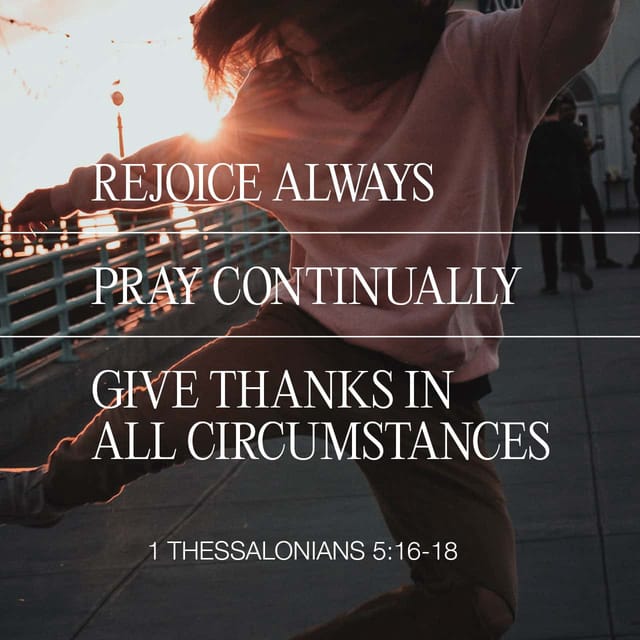
Rejoice always. Pray without ceasing. In everything give thanks, for this is the will of God in Christ Jesus toward you.
1 Thessalonians 5:16-18
Historical lead-up
Paul wrote to the young church in Thessalonica after the believers had received the gospel amid opposition. He had been separated from them and was concerned for their faith, so he encouraged them and gave practical guidance for life together as they waited for Christ’s return.
Why this verse was written
Near the end of the letter, Paul offers brief instructions for the church’s shared life and worship. These words call believers to a steady posture of joy, prayer, and gratitude—not only when circumstances are easy, but as part of their ongoing life with God.
True meaning
Paul is addressing the Thessalonian believers. Rejoicing always does not mean pretending that pain is absent; it means that hardship does not have the final word over Christian hope. Praying continually points to an ongoing dependence on God, not speaking without pause. Giving thanks in every circumstance means bringing gratitude to God even in difficult seasons; it does not require calling evil or suffering good. Paul presents these practices as God’s will for believers in Christ.
Living it today
Choose one ordinary moment today to thank God, and set aside a brief time to pray about a concern you are carrying. In a difficult season, you can be honest with God about grief or frustration while also asking for help to notice signs of grace. In relationships, practice encouragement and gratitude rather than taking others for granted. Consider discussing with your group how prayer and thankfulness can support someone who is struggling.
What follows
Paul continues with practical guidance for the church, including honoring the work of its leaders, pursuing peace, and responding to one another with patience and goodness. These instructions show how a life of prayer and gratitude can take shape in community.
Related: John 1:14 — King James Version (KJV) (2026-08-22)
Related: John 1:14 — Young’s Literal Translation (YLT) (2026-08-22)
Go deeper with a Verse Study Card — plain words, context, key words, cross-references, and a reflection.
Study this verse
Plain words, context, key words, cross-references, and one reflection question for a single verse.