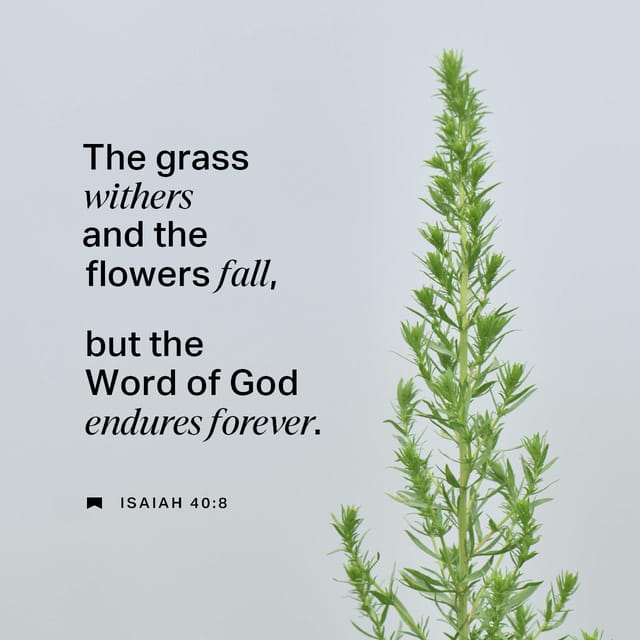
Withered hath grass, faded the flower, But a word of our God riseth for ever.
Isaiah 40:8
Historical lead-up
Isaiah 40 begins with a message of comfort for God’s people. The chapter looks toward a time when hardship and exile will give way to restoration. Before this verse, the prophet describes human life and glory as fragile, like grass and flowers that do not last. Against that changing world, God’s word remains sure.
Why this verse was written
Isaiah speaks to people who need hope and reassurance. The verse contrasts what fades with what endures: human strength and circumstances can change, but God’s word does not fail. Its purpose is to direct the people’s trust toward God’s lasting promise rather than temporary appearances.
True meaning
The verse says that grass withers and flowers fade, while the word of God “riseth for ever”—it stands and endures. The image is not a promise that life will never be difficult or that every human plan will succeed. It is an assurance that God remains faithful and that what he has spoken is more dependable than anything that passes away.
Living it today
When circumstances feel uncertain, this verse invites us to anchor our hope in God’s faithfulness rather than in what is temporary. We can make room to listen to Scripture, pray honestly about our worries, and let God’s enduring word shape our choices. In relationships, we can offer steady encouragement and keep our own promises, remembering that faithfulness matters even when life changes.
What follows
Verses 9–11 turn this assurance into a message to proclaim: “Behold, your God!” They describe the Lord coming with strength, while also caring for his people like a shepherd who gathers and carries the lambs. Together, these verses show both God’s power and his tenderness. Today, we can share hope without fear and seek God’s care, especially when we feel vulnerable or weary.
Related: John 1:14 — Young’s Literal Translation (YLT) (2026-08-22)
Related: John 1:14 — King James Version (KJV) (2026-08-22)
Go deeper with a Verse Study Card — plain words, context, key words, cross-references, and a reflection.
Study this verse
Plain words, context, key words, cross-references, and one reflection question for a single verse.