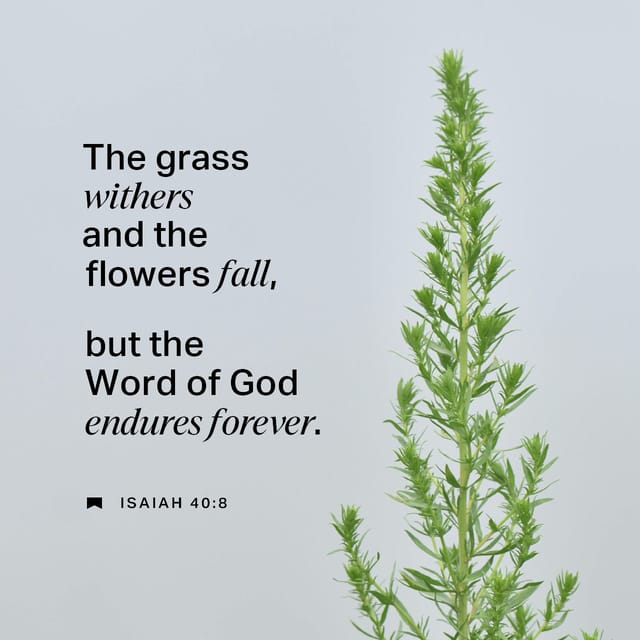
The grass withers, the flower fades; but the word of our God stands forever."
Isaiah 40:8
Historical lead-up
Isaiah 40 begins a message of comfort for God’s people. The chapter looks ahead to a time when their hardship and exile will not have the final word. Against the uncertainty of human life and earthly power, the passage points to God’s lasting faithfulness.
Why this verse was written
Isaiah’s message was given to strengthen God’s people with hope. The verse contrasts what fades with what endures: human life and circumstances are temporary, but God’s word remains dependable. It reassures the hearers that God’s promises are not undone by changing events.
True meaning
In context, the verse declares that human strength and glory do not last, while God’s word stands firm. “The word of our God” refers to God’s reliable message and purpose, not merely to human opinions about what God might say. The verse invites trust in God because his faithfulness does not expire when circumstances change.
Living it today
When plans, health, or relationships feel uncertain, this verse can remind us to seek steadiness in God rather than in what is temporary. We can make time to read Scripture, pray honestly, and ask how God’s enduring truth should shape our choices. In relationships, it encourages humility: our own confidence and influence are limited, so we can listen, serve, and treat others with care. Consider discussing with your group where you most need hope or steadiness today.
What follows
The passage continues by picturing a messenger announcing good news to Zion and Jerusalem. The focus moves from the enduring word of God to the hope of God’s coming presence and care for his people.
Related: John 1:14 — King James Version (KJV) (2026-08-22)
Related: John 1:14 — Young’s Literal Translation (YLT) (2026-08-22)
Go deeper with a Verse Study Card — plain words, context, key words, cross-references, and a reflection.
Study this verse
Plain words, context, key words, cross-references, and one reflection question for a single verse.