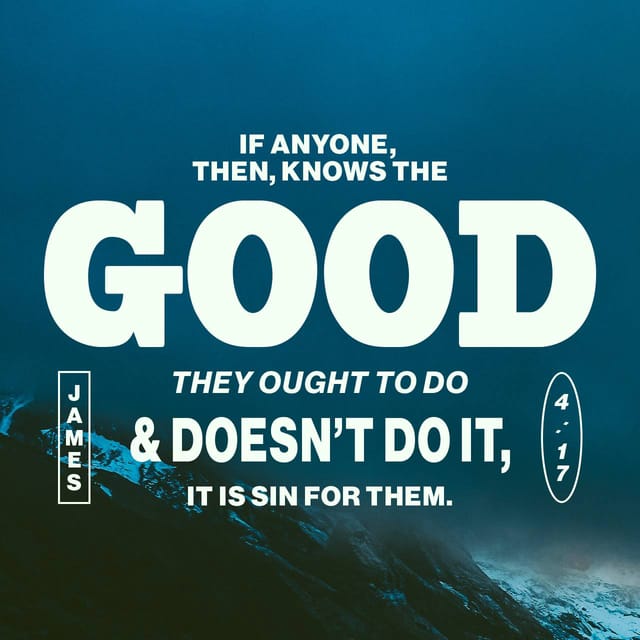
To him therefore who knows to do good, and doesn't do it, to him it is sin.
James 4:17
Historical lead-up
James writes to believers facing pressures that can make faith feel divided between trusting God and following the world’s ways. In this part of the letter, he warns against prideful planning and reminds readers that their lives and future are in God’s hands.
Why this verse was written
James is calling his readers to put their faith into practice. His concern is not only that people avoid doing wrong, but also that they respond faithfully when they recognize what is right.
True meaning
James is speaking to his fellow believers. The verse teaches that knowing the good one ought to do brings responsibility: deliberately refusing to do it is itself sin. “Knowing” points to a clear awareness of what faithfulness calls for, while “good” includes actions that honor God and serve others. This is not a call to anxious perfection or to do every possible good deed; it is a call not to ignore a clear opportunity for obedience.
Living it today
Ask God to help you notice the good that is genuinely yours to do today: telling the truth, making amends, offering practical help, or following through on a responsibility. Take one faithful step rather than waiting for perfect conditions. In relationships, consider whether you need to listen, forgive, or speak with kindness. Pray for wisdom about what is yours to carry, and discuss difficult choices with a trusted fellow believer.
What follows
The next chapter continues James’s warning about wealth, injustice, and misplaced confidence. It presses readers to consider how their choices affect others and to live with humility before God.
Related: John 1:14 — King James Version (KJV) (2026-08-22)
Related: John 1:14 — Young’s Literal Translation (YLT) (2026-08-22)
Go deeper with a Verse Study Card — plain words, context, key words, cross-references, and a reflection.
Study this verse
Plain words, context, key words, cross-references, and one reflection question for a single verse.