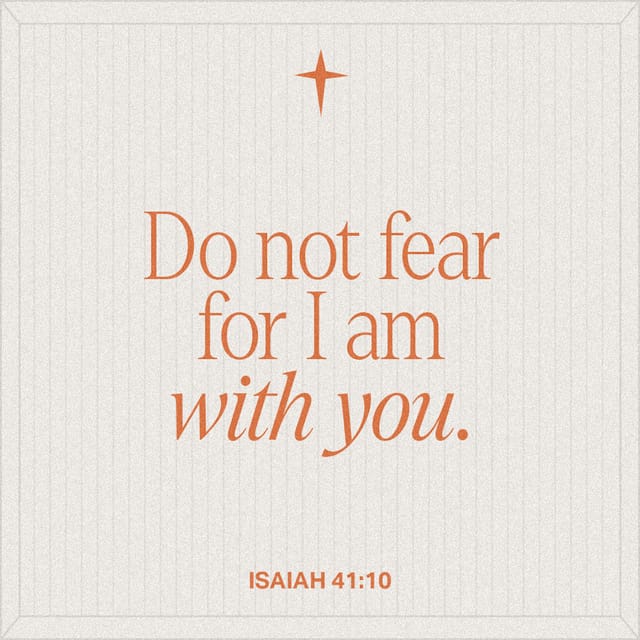
Don't you be afraid, for I am with you. Don't be dismayed, for I am your God. I will strengthen you. Yes, I will help you. Yes, I will uphold you with the right hand of my righteousness.
Isaiah 41:10
Historical lead-up
Isaiah 41 speaks to God’s people in a time of fear and uncertainty. The surrounding passage pictures nations and rulers being shaken by events, while Israel is reminded that the Lord has not forgotten the people he chose. The verse belongs to a message of reassurance amid trouble, not a promise that life will be free of hardship.
Why this verse was written
The prophet Isaiah delivered this message to strengthen God’s people and call them to trust him. They needed to remember who God is and that their future did not depend only on powerful nations or changing circumstances. The words offer comfort grounded in God’s presence, help, and faithfulness.
True meaning
God is speaking to his people. The verse tells them not to give way to fear because he is with them, and it points to his strength and support. Its comfort is not that believers will never feel afraid or face difficulty; it is that they are not abandoned in those moments. The promise is rooted in God’s character and care.
Living it today
When fear rises, name what is troubling you and bring it honestly to God in prayer. Ask for courage and wisdom for the next faithful step, rather than expecting every problem to disappear at once. You might also encourage someone who feels alone, offer practical help, or talk with a trusted person in your church community. Let this verse lead you toward dependence on God, not shame for feeling afraid.
What follows
The passage continues by describing God as the one who strengthens and helps his people. The surrounding message keeps directing their attention away from fear and toward the Lord’s care.
Related: John 1:14 — Young’s Literal Translation (YLT) (2026-08-22)
Related: John 1:14 — King James Version (KJV) (2026-08-22)
Go deeper with a Verse Study Card — plain words, context, key words, cross-references, and a reflection.
Study this verse
Plain words, context, key words, cross-references, and one reflection question for a single verse.