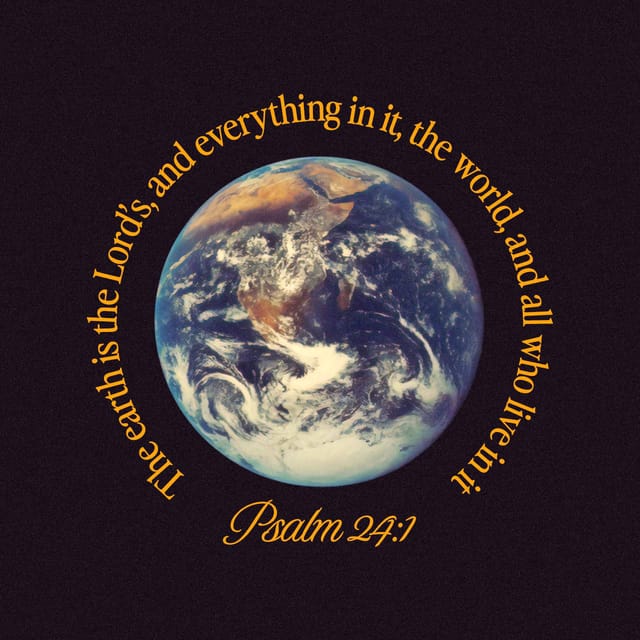
The earth is Yahweh's, with its fullness; the world, and those who dwell therein.
Psalms 24:1
Historical lead-up
Psalm 24 is a song of worship that celebrates God as King. Its opening points to the whole created world and everything in it as belonging to the Lord. The psalm then turns toward the question of who may come into God’s presence, and later calls the gates to welcome the glorious King.
Why this verse was written
The psalm was written to help God’s people worship with a clear view of who God is: the maker and rightful ruler of all things. Its words would remind worshipers that their lives, their community, and the land around them are not ultimately theirs to claim apart from God.
True meaning
The verse declares that the earth and all its fullness belong to the Lord. “Fullness” points to everything that fills the world—its people, creatures, resources, and abundance. The statement is not merely about ownership; it calls us to recognize God’s authority and to receive what we have with gratitude and responsibility.
Living it today
Let this truth shape how you use your time, money, abilities, and care for the natural world. Ask in prayer, “How can I honor God with what has been entrusted to me?” In relationships, remember that other people belong to God too, and treat them with dignity rather than as possessions or obstacles. A small group might discuss one resource each person can steward more thoughtfully this week.
What follows
The psalm next asks who may stand in the Lord’s presence, emphasizing clean hands and a sincere heart. It then celebrates the Lord as the glorious King. These next thoughts connect God’s ownership of creation with worship and a life turned toward him.
Related: John 1:14 — King James Version (KJV) (2026-08-22)
Related: John 1:14 — Young’s Literal Translation (YLT) (2026-08-22)
Go deeper with a Verse Study Card — plain words, context, key words, cross-references, and a reflection.
Study this verse
Plain words, context, key words, cross-references, and one reflection question for a single verse.