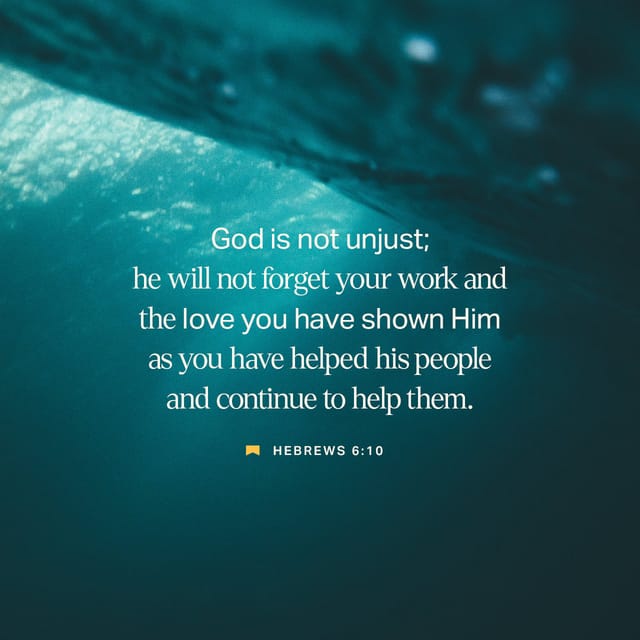
For God is not unrighteous, so as to forget your work and the labor of love which you showed toward his name, in that you served the saints, and still do serve them.
Hebrews 6:10
Historical lead-up
Hebrews was written to Christians facing pressure and weariness. The letter urges them to hold firmly to their hope and not drift away from trusting God. Just before this verse, the writer encourages them to keep showing diligence and to follow the example of those who inherit God’s promises through faith and patience.
Why this verse was written
The writer wanted these believers to keep going in faith. They had shown love through serving other believers, and the writer reassures them that their efforts are not overlooked by God. This encouragement supports the letter’s wider call to persevere.
True meaning
Hebrews 6:10 points to God’s justice and faithfulness: God does not forget the love his people have shown in serving others for his sake. The verse is not saying that people earn God’s favor by doing good works. Rather, their service is evidence of love and faith, and God sees it even when others may not. The writer is speaking to the Christian community and encouraging them to continue in that same care for one another.
Living it today
Let this verse encourage you when service feels unnoticed or tiring. Ask God to help you serve with love rather than for recognition, and look for practical ways to care for people in your church, family, or community. It can also prompt gratitude: notice and encourage the quiet acts of service others offer. If you feel worn down, pray honestly and talk with a trusted person in your small group about how to keep serving with healthy support.
What follows
The writer goes on to urge the readers to keep showing diligence and to hold on to hope, following the example of those who trust God and wait patiently for what he has promised.
Related: John 1:14 — King James Version (KJV) (2026-08-22)
Related: John 1:14 — Young’s Literal Translation (YLT) (2026-08-22)
Go deeper with a Verse Study Card — plain words, context, key words, cross-references, and a reflection.
Study this verse
Plain words, context, key words, cross-references, and one reflection question for a single verse.