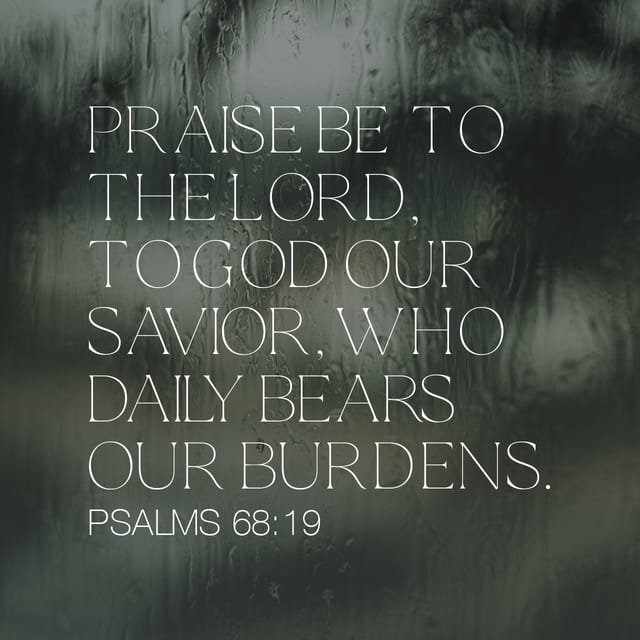
Blessed be the Lord, who daily bears our burdens, even the God who is our salvation. Selah.
Psalms 68:19
Historical lead-up
In the context of Psalms, this verse comes from a time when the Israelites were reflecting on God’s faithfulness and power throughout their history. The psalmist recalls God’s mighty acts, including His deliverance of the people from oppression and His guidance in their journey. This psalm celebrates God’s presence among His people and acknowledges His role as a protector and provider.
Why this verse was written
This verse was written to encourage and uplift the community of believers. The psalmist aims to remind the people of Israel of God’s continual support and the blessings He bestows upon them. It serves as a declaration of gratitude and recognition of God’s daily provision, reinforcing the idea that God is actively involved in the lives of His people.
True meaning
The verse expresses the profound truth that God daily bears our burdens. The key phrase here is “daily,” which emphasizes God’s constant care and involvement in our lives. The psalmist is speaking to the people of Israel, reminding them that they are not alone in their struggles. Instead, God is there to help carry their loads, offering strength and support in times of need.
Living it today
This verse can shape our daily lives by encouraging us to rely on God for our needs and challenges. In relationships, it reminds us to support one another, just as God supports us. In prayer, we can bring our burdens to God, trusting that He is willing to help us carry them. Obedience to this truth involves acknowledging our dependence on God and being open to His guidance and provision in every aspect of our lives.
What follows
The natural next thought in the passage continues to celebrate God’s power and the joy of His presence among His people, reinforcing the themes of gratitude and reliance on God’s strength.
Related: John 1:14 — King James Version (KJV) (2026-08-22)
Related: John 1:14 — Young’s Literal Translation (YLT) (2026-08-22)
Go deeper with a Verse Study Card — plain words, context, key words, cross-references, and a reflection.
Study this verse
Plain words, context, key words, cross-references, and one reflection question for a single verse.