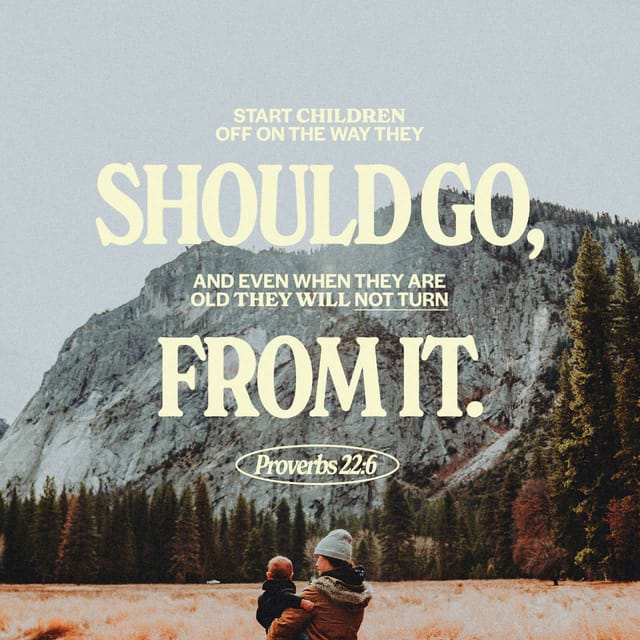
Train up a child in the way he should go: and when he is old, he will not depart from it.
Proverbs 22:6
Historical lead-up
The book of Proverbs is a collection of wise sayings, primarily attributed to King Solomon, who was known for his wisdom. In this context, the society was deeply rooted in family and community values, where the upbringing of children was seen as crucial for the future of both the family and the nation. The teachings in Proverbs often reflect the importance of moral and ethical living, guiding the next generation to follow a righteous path.
Why this verse was written
This verse was written to provide guidance to parents and caregivers on the importance of teaching children the right way to live. The audience includes families and individuals who are responsible for the upbringing of children. The purpose is to emphasize that early training in moral and spiritual values will have lasting effects, encouraging a life that aligns with God’s principles.
True meaning
The verse “Train up a child in the way he should go: and when he is old, he will not depart from it” highlights the responsibility of parents to actively guide their children. The phrase “in the way he should go” suggests a path of righteousness and wisdom, tailored to the child’s unique character and potential. The promise that they “will not depart from it” indicates that the lessons learned in childhood will stay with them throughout their lives, shaping their decisions and actions.
Living it today
This verse encourages us to be intentional in how we raise and influence the younger generation. Parents and guardians can engage in meaningful conversations about values, model good behavior, and create a nurturing environment where children feel safe to explore their faith. In relationships, we can mentor and support younger individuals, guiding them in their spiritual journeys. Prayer is essential, asking God for wisdom in teaching and for the hearts of children to be open to His truth.
What follows
The verses that follow Proverbs 22:6 introduce themes of responsibility and consequences. Proverbs 22:7 reminds us that wealth can create power dynamics, while Proverbs 22:8 warns that wrongdoing leads to emptiness. Proverbs 22:9 highlights the blessings of generosity. Together, these verses reinforce the idea that the values we instill in children not only shape their character but also influence their interactions with others and their understanding of wealth and generosity in life.
Related: John 1:14 — King James Version (KJV) (2026-08-22)
Related: John 1:14 — Young’s Literal Translation (YLT) (2026-08-22)
Go deeper with a Verse Study Card — plain words, context, key words, cross-references, and a reflection.
Study this verse
Plain words, context, key words, cross-references, and one reflection question for a single verse.