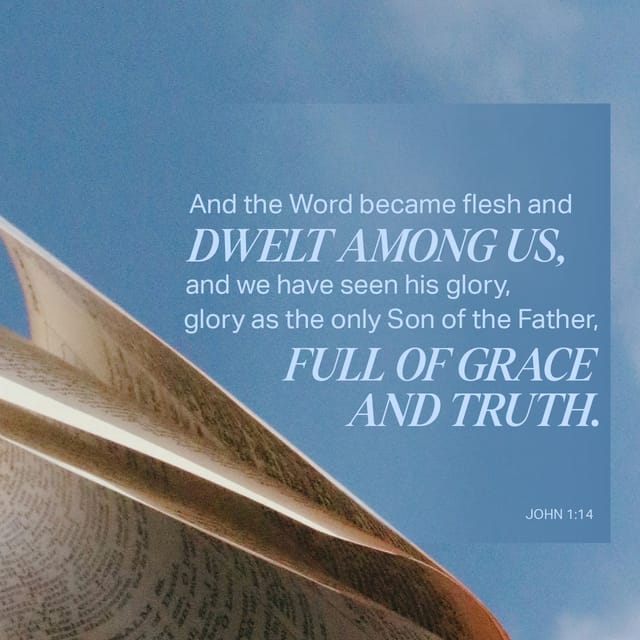
And the Word became flesh, and dwelt among us (and we have contemplated his glory, a glory as of an only-begotten with a father), full of grace and truth;
John 1:14
Historical lead-up
In the opening chapter of John’s Gospel, we find a profound introduction to the identity of Jesus Christ. The author, John, is setting the stage by emphasizing the divine nature of Jesus as the Word, which existed from the beginning. This context is crucial as it highlights the contrast between the eternal Word and the temporal world, preparing us for the incredible truth that follows: the Word becoming flesh.
Why this verse was written
John wrote this verse to convey the significance of Jesus’ incarnation to his audience, which included both Jewish and Gentile believers. He aimed to affirm the belief that Jesus is not just a prophet or teacher but the very embodiment of God’s presence among humanity. By emphasizing that the Word became flesh, John sought to deepen the understanding of Jesus’ divine nature and His mission to bring grace and truth into the world.
True meaning
This verse reveals that Jesus, referred to as “the Word,” took on human form and lived among us. The phrase “dwelt among us” signifies a close, personal relationship, indicating that God chose to be with His creation in a tangible way. The mention of His glory, described as that of an only-begotten Son, emphasizes His unique relationship with the Father. The terms “full of grace and truth” highlight the essence of Jesus’ character and mission, showcasing that He embodies both compassion and reality, offering a complete revelation of God to humanity.
Living it today
Understanding that Jesus became flesh encourages us to reflect on the importance of relationships in our own lives. Just as Jesus dwelt among us, we are called to be present with others, showing grace and truth in our interactions. This verse invites us to contemplate the glory of Christ in our daily lives, inspiring us to seek His presence through prayer and to share His love with those around us. We can practice grace by forgiving others and speaking truth in love, embodying the character of Christ in our communities.
What follows
The verses that follow expand on the themes introduced in verse 14. In John 1:15, John the Baptist bears witness to Jesus, affirming His preeminence and divine nature. This testimony reinforces the idea that Jesus is central to God’s plan. John 1:16 speaks of receiving grace upon grace, illustrating the abundance of God’s blessings through Christ. Finally, John 1:17 contrasts the law given through Moses with the grace and truth that come through Jesus, highlighting the transformative power of Christ’s message. Together, these verses remind us of the richness of our relationship with Jesus and the continual grace we receive as we walk in faith.
Related: First Steps Deeper (7 days)
Related: John 1:14 — Young’s Literal Translation (YLT) (2026-08-22)
Related: John 1:14 — Catholic Public Domain Version (CPDV) (2026-08-22)
Related: John 1:14 — King James Version (KJV) (2026-08-22)
Related: John 1:14 — New International Version (NIV) (2026-08-22)
Related: Following Jesus Daily
Related: John 1:14 — New Living Translation (NLT) (2026-08-22)
Related: Forgiven to Forgive
Go deeper with a Verse Study Card — plain words, context, key words, cross-references, and a reflection.
Study this verse
Plain words, context, key words, cross-references, and one reflection question for a single verse.