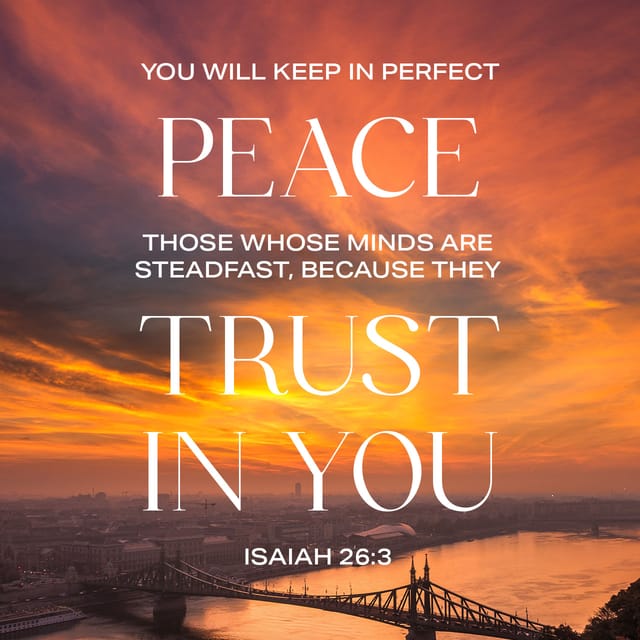
You will keep whoever's mind is steadfast in perfect peace, because he trusts in you.
Isaiah 26:3
Historical lead-up
Isaiah spoke to Judah during a time of danger and uncertainty, as powerful nations threatened the people and their future seemed fragile. The surrounding chapters include warnings about judgment, but they also look ahead to God’s deliverance and a day when his people will praise him. Isaiah 26 belongs to that hopeful vision, expressed as a song of trust.
Why this verse was written
The verse is part of a song that celebrates God as a dependable refuge. It encourages God’s people to look to him for security rather than placing their deepest confidence in changing circumstances or human strength.
True meaning
The verse describes a person whose mind is firmly directed toward God and who trusts him. The promise of peace is not a guarantee that life will be free from trouble or anxious feelings. It points to a deep steadiness grounded in God’s character and care. The verse presents trust as an ongoing posture: turning one’s attention and confidence toward God.
Living it today
When worry rises, name what is troubling you and bring it honestly to God in prayer. You might pause to remember what you know of God’s faithfulness, then choose one wise next step rather than trying to solve everything at once. In relationships, this kind of trust can help you respond with patience and honesty instead of being ruled by fear. Consider sharing with your group what helps you turn your attention back to God, and encourage one another in prayer.
What follows
The song continues by describing trust in the Lord as lasting security and by contrasting that trust with the instability of relying on human power. The passage invites its hearers to keep waiting for God and seeking him.
Related: John 1:14 — King James Version (KJV) (2026-08-22)
Related: John 1:14 — Young’s Literal Translation (YLT) (2026-08-22)
Go deeper with a Verse Study Card — plain words, context, key words, cross-references, and a reflection.
Study this verse
Plain words, context, key words, cross-references, and one reflection question for a single verse.