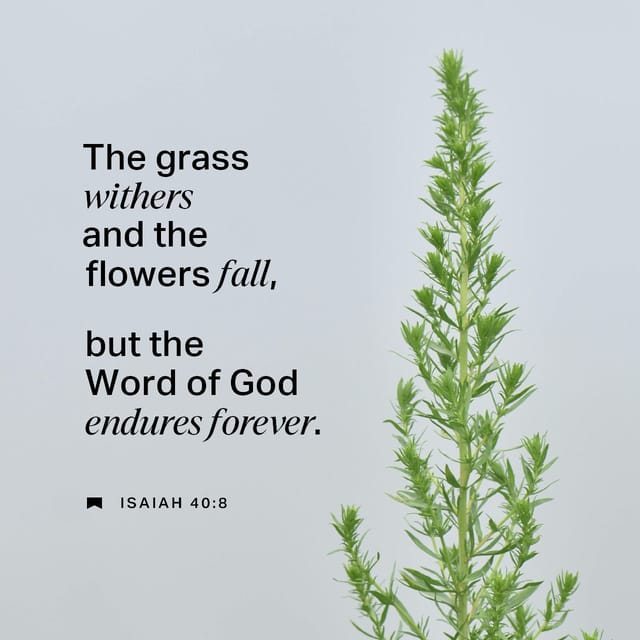
The grass withers, the flower fades; but the word of our God stands forever."
Isaiah 40:8
Historical lead-up
Isaiah 40 begins a section of the book that brings comfort and hope to God’s people. The wider setting looks toward a time when Judah would face loss and displacement, yet God would not abandon them. The chapter points to God’s power to restore and to his faithfulness through changing circumstances.
Why this verse was written
Isaiah 40:8 contrasts the short-lived nature of human life and earthly things with the lasting reliability of God’s word. It reassures God’s people that their hope does not rest on circumstances that can change, but on what God has spoken and remains faithful to do.
True meaning
The verse’s central contrast is between what fades and what endures. Human strength, plans, and achievements are temporary; God’s word stands firm. In context, this is a message of comfort: God’s promises are dependable even when life feels unsettled. It is not saying that every human word or plan is lasting, but that God can be trusted.
Living it today
When plans change or worries feel overwhelming, pause and remember that God’s faithfulness is not measured by how stable life feels. Let this verse encourage you to seek God in prayer, make choices shaped by his teaching, and speak with honesty and kindness. In a small group, you might share where you need steadiness and pray for one another.
What follows
The passage continues by announcing good news and directing attention to God’s coming presence and care for his people. The lasting word of God is connected with the hope that he will act to save and shepherd them.
Related: John 1:14 — King James Version (KJV) (2026-08-22)
Related: John 1:14 — Young’s Literal Translation (YLT) (2026-08-22)
Go deeper with a Verse Study Card — plain words, context, key words, cross-references, and a reflection.
Study this verse
Plain words, context, key words, cross-references, and one reflection question for a single verse.