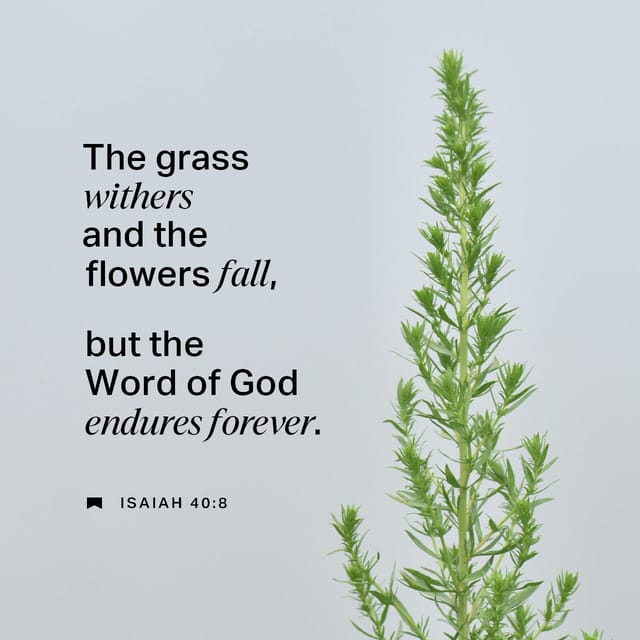
The grass withereth, the flower fadeth: but the word of our God shall stand for ever.
Isaiah 40:8
Historical lead-up
Isaiah 40 begins with words of comfort for God’s people. The chapter turns their attention from hardship and uncertainty toward God’s faithfulness and the hope of his coming help. The image of grass and flowers fading reminds listeners that human life and circumstances do not last forever.
Why this verse was written
Isaiah spoke to God’s people as a prophet, calling them to trust what God had said. The verse contrasts what is temporary with what endures: the created world changes, but God’s word remains. It offers reassurance that God’s promises are not made unreliable by changing times.
True meaning
“The grass” and “the flower” picture things that flourish for a time and then fade. “The word of our God” means what God has spoken and promised. The verse says that, unlike passing human strength or circumstances, God’s word stands forever. It is not a promise that life will never change; it is a reason to place lasting trust in God.
Living it today
When plans change or life feels uncertain, pause and remember that God’s faithfulness is not measured by how steady your circumstances feel. In prayer, bring him your fears and ask for help trusting what he has said. In relationships, let this steadiness shape you into someone who keeps promises, speaks honestly, and offers comfort rather than false certainty. You might also discuss with your group what feels temporary in your life and where you need to rely on God.
What follows
Verses 9–11 turn the lasting word into a message to proclaim: Jerusalem is told to announce, without fear, “Behold your God!” The passage then describes the Lord coming with strength and also caring for his people like a shepherd who gathers and gently leads the vulnerable. Together, these verses show both God’s power to act and his tender care. Today, they invite us to share hope with courage while treating those who are weary or vulnerable with gentleness.
Related: John 1:14 — King James Version (KJV) (2026-08-22)
Related: John 1:14 — Young’s Literal Translation (YLT) (2026-08-22)
Go deeper with a Verse Study Card — plain words, context, key words, cross-references, and a reflection.
Study this verse
Plain words, context, key words, cross-references, and one reflection question for a single verse.