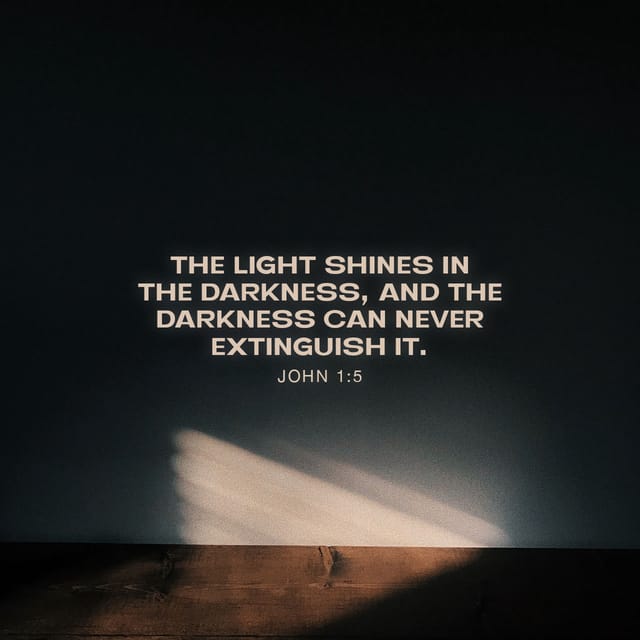
The light shines in the darkness, and the darkness hasn't overcome it.
John 1:5
Historical lead-up
John opens his Gospel by describing Jesus as the eternal Word, the source of life and light. Before telling the story of Jesus’ birth and ministry, John sets out who Jesus is and why his coming matters. The opening moves from creation to the arrival of God’s light in a world marked by darkness.
Why this verse was written
John wrote to help readers recognize Jesus and trust in him. This verse belongs to the Gospel’s opening picture of Jesus as the light who enters the world. It introduces the conflict between God’s life-giving light and the darkness that resists it.
True meaning
The verse presents light and darkness as more than physical conditions. Light points to God’s life, truth, and presence; darkness describes the world’s sin and opposition to God. John’s central assurance is that darkness cannot overcome or extinguish the light. The verse speaks about Jesus and the lasting power of his light, not a promise that believers will never face hardship.
Living it today
When life feels confusing or heavy, remember that darkness does not have the final word. Ask God to help you walk in truth, choose what is good, and bring hope to someone who is struggling. In relationships, resist hiding, bitterness, or despair; seek honest, loving steps toward peace where it is wise to do so. You might pray, “God, help me trust your light and reflect it in the way I treat others.” Consider discussing with your group where you need hope or courage this week.
What follows
John next describes the witness of John the Baptist, who came to point people toward the light. The opening continues by showing that the light came into the world, though not everyone welcomed it.
Related: John 1:14 — Young’s Literal Translation (YLT) (2026-08-22)
Related: John 1:14 — King James Version (KJV) (2026-08-22)
Go deeper with a Verse Study Card — plain words, context, key words, cross-references, and a reflection.
Study this verse
Plain words, context, key words, cross-references, and one reflection question for a single verse.