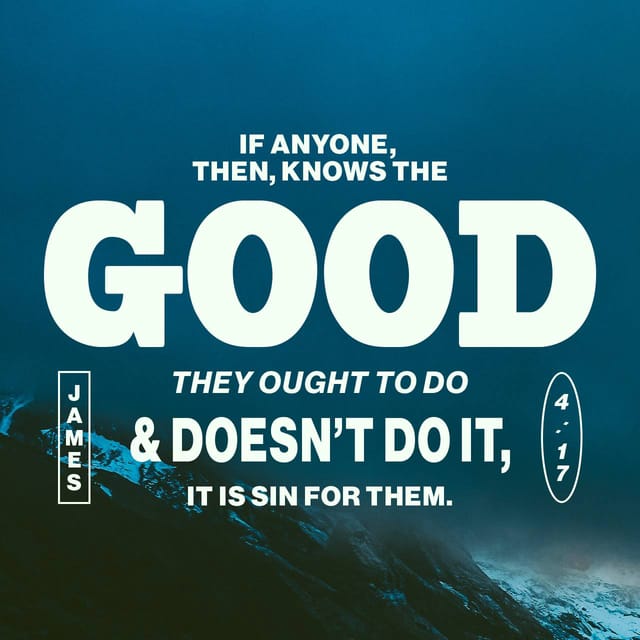
To him therefore who knows to do good, and doesn't do it, to him it is sin.
James 4:17
Historical lead-up
James writes to believers facing trials and tensions in their communities. In the surrounding passage, he warns against speaking proudly about plans for the future as though life and its outcomes were fully under human control. He calls his readers to acknowledge God in their plans and to do what they know is right.
Why this verse was written
James is urging Christians to live with humility before God and integrity toward one another. His purpose is not merely to teach a general rule about right and wrong, but to press readers to act on the good they already understand rather than treating knowledge as enough.
True meaning
James is addressing his readers. The verse teaches that knowing what is right brings responsibility: when someone recognizes a good and faithful action they should take, deliberately failing to do it is also a moral choice. The point is not that every mistake is the same as intentional wrongdoing, but that we should not ignore clear opportunities to obey God and do good.
Living it today
Ask God to help you notice the good you can do today: tell the truth, make peace, keep a promise, offer practical help, or speak with kindness. If you have been putting off a needed step, consider taking it humbly and promptly. In relationships, this can mean listening carefully, admitting harm, or offering forgiveness without pretending that serious problems do not need attention. Pray for wisdom, and talk with a trusted fellow believer when the right next step is unclear.
What follows
The passage continues by confronting pride and self-reliance. James calls his readers to humble themselves before God, reinforcing the need to bring both their plans and their actions under God’s care.
Related: John 1:14 — King James Version (KJV) (2026-08-22)
Related: John 1:14 — Young’s Literal Translation (YLT) (2026-08-22)
Go deeper with a Verse Study Card — plain words, context, key words, cross-references, and a reflection.
Study this verse
Plain words, context, key words, cross-references, and one reflection question for a single verse.