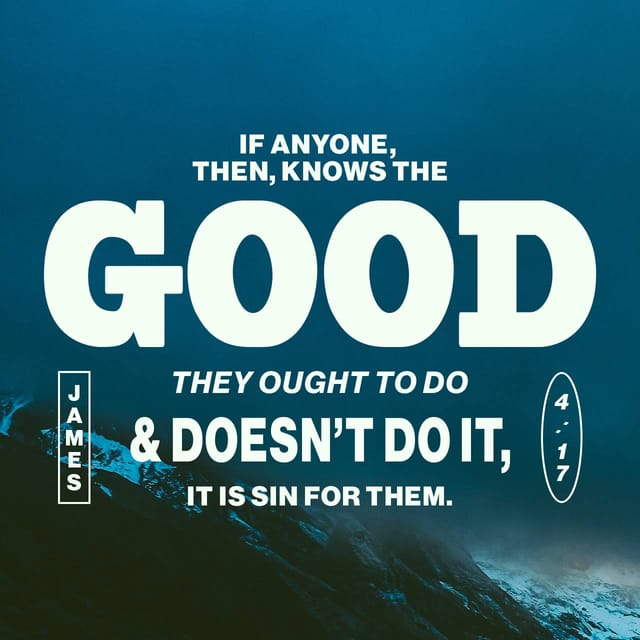
Therefore, he who knows that he ought to do a good thing, and does not do it, for him it is a sin.
James 4:17
Historical lead-up
James has been warning believers against prideful confidence about the future. He describes people making plans as though they control what tomorrow will bring, instead of remembering that their lives depend on God. He urges them to seek God’s will in their plans and to avoid boasting in their own self-assurance.
Why this verse was written
James writes to guide Christian communities toward a faith that shows itself in humble, faithful action. This verse brings his warning about proud planning to a practical point: knowing what is right matters, but so does doing it.
True meaning
The verse addresses anyone who recognizes a good thing they ought to do but chooses not to do it. “Knows” points to awareness of a real responsibility, and “does not do it” describes failing to act on that knowledge. James calls this sin—not to make every uncertainty a burden, but to remind readers that deliberate neglect of what is right is spiritually serious.
Living it today
When you recognize a clear opportunity to help, tell the truth, make peace, or fulfill a responsibility, ask God for the courage to act rather than delay. In relationships, this may mean listening carefully, apologizing, or offering practical support. In prayer, ask for wisdom to distinguish a genuine responsibility from pressure or fear, and for strength to follow through. Discuss with trusted believers how to take a faithful next step.
What follows
The next thought in James’s letter turns to a warning against injustice and self-indulgence. It continues the call to examine not only what we intend to do, but also how our choices affect other people. Let this passage lead to honest reflection, prayer, and concrete obedience.
Related: John 1:14 — Catholic Public Domain Version (CPDV) (2026-08-22)
Related: John 1:14 — King James Version (KJV) (2026-08-22)
Go deeper with a Verse Study Card — plain words, context, key words, cross-references, and a reflection.
Study this verse
Plain words, context, key words, cross-references, and one reflection question for a single verse.