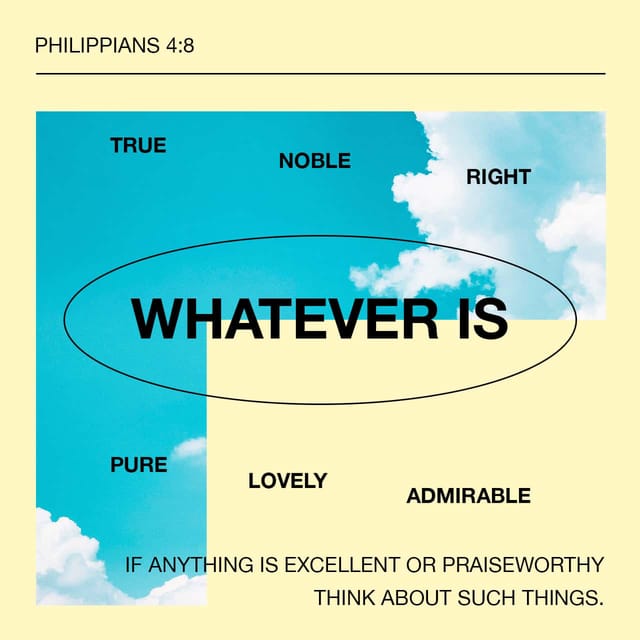
Concerning the rest, brothers, whatever is true, whatever is chaste, whatever is just, whatever is holy, whatever is worthy to be loved, whatever is of good repute, if there is any virtue, if there is any praiseworthy discipline: meditate on these.
Philippians 4:8
Historical lead-up
Paul wrote to the Christians in Philippi while he was facing hardship. In the surrounding passage, he encourages them to rejoice, to respond with gentleness, to bring their worries to God in prayer, and to receive God’s peace. Verse 8 continues that practical encouragement by turning their attention toward what is good and worthy.
Why this verse was written
Paul wrote to strengthen and guide the Philippian believers in their shared life of faith. He wanted them not only to pray when anxious, but also to shape their thoughts around what is true and good. His words offer a pattern for faithful attention amid the pressures of life.
True meaning
Paul addresses the believers as “brothers,” a warm way of speaking to fellow members of the Christian community. He names qualities such as truth, purity, justice, holiness, loveliness, and good reputation, then urges them to “meditate on these.” The point is not to ignore hardship or pretend everything is good. It is to give careful attention to what is genuinely worthy, virtuous, and praiseworthy, rather than letting harmful or anxious thoughts take over.
Living it today
When you notice your thoughts becoming fearful, bitter, or distracted, pause and ask what is true and good in the situation. You might reflect on a trustworthy act of kindness, choose words that are fair and respectful, or give your attention to something that encourages love and integrity. In prayer, bring your worries honestly to God and ask for help to focus on what is worthy. You can also discuss with your group how this kind of attention might shape your choices and relationships this week.
What follows
In verse 9, Paul moves from what the believers are to think about to what they are to put into practice. He points to what they learned, accepted, heard, and saw in him, and connects doing these things with the presence of the God of peace. In verses 10–11, he expresses joy at the Philippians’ renewed care and explains that he has learned contentment in different circumstances. Together, these verses invite us to let good thoughts become faithful actions, to care for one another, and to learn contentment with God’s help.
Related: John 1:14 — Catholic Public Domain Version (CPDV) (2026-08-22)
Related: John 1:14 — King James Version (KJV) (2026-08-22)
Go deeper with a Verse Study Card — plain words, context, key words, cross-references, and a reflection.
Study this verse
Plain words, context, key words, cross-references, and one reflection question for a single verse.