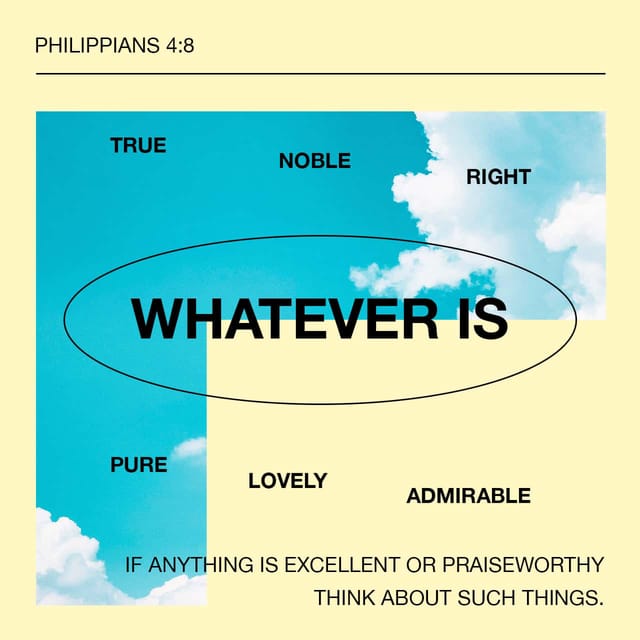
For the rest, brethren, whatsoever things [are] true, whatsoever things [are] noble, whatsoever things [are] just, whatsoever things [are] pure, whatsoever things [are] amiable, whatsoever things [are] of good report; if [there be] any virtue and if any praise, think on these things.
Philippians 4:8
Historical lead-up
Paul wrote to the believers in Philippi while he was in difficult circumstances. In the preceding verses, he encourages them to rejoice in the Lord, respond with gentleness, bring their concerns to God in prayer, and receive God’s peace. Verse 8 continues that encouragement by turning their attention toward what is good and worthy of reflection.
Why this verse was written
Paul wrote to encourage the Philippian church in its faith and life together. He wanted them not only to pray when anxious, but also to guide their thoughts toward what is true, honorable, just, pure, loving, and commendable. These words offer a practical pattern for a community seeking to follow Christ amid hardship.
True meaning
Paul addresses the believers as “brethren,” inviting them to consider carefully what they allow to occupy their minds. “Noble” points to what is honorable; “just” to what is right; “pure” to what is morally clean; and “amiable” and “of good report” to what is lovely and worthy of respect. His closing words gather these qualities together: when something shows virtue or deserves praise, give it thoughtful attention.
This is not a call to ignore pain or pretend that evil is good. It is an invitation to keep returning the mind to what reflects goodness and truth, rather than letting fear, resentment, or harmful influences have the final word.
Living it today
Notice what is shaping your attention: conversations, news, entertainment, and the thoughts you repeat to yourself. Ask whether they are true, just, pure, and worthy of respect. When worry rises, bring it honestly to God in prayer, then deliberately remember what is good and trustworthy.
In relationships, look for what is honorable in others and speak words that build up rather than tear down. In a small group, you might share one quality from this verse that you want to practice this week. Pray for help to put it into action, and discuss your next steps with someone you trust.
What follows
In verse 9, Paul moves from what the believers should think about to what they should do. He urges them to practice what they had learned, received, heard, and seen in him, and connects that faithful practice with the presence of the God of peace. Verses 10–11 then show Paul’s gratitude for the Philippians’ renewed care and his learned contentment in changing circumstances. Together, these verses remind us that good thoughts are meant to shape faithful actions, gratitude, and contentment.
Related: John 1:14 — Young’s Literal Translation (YLT) (2026-08-22)
Related: John 1:14 — King James Version (KJV) (2026-08-22)
Go deeper with a Verse Study Card — plain words, context, key words, cross-references, and a reflection.
Study this verse
Plain words, context, key words, cross-references, and one reflection question for a single verse.