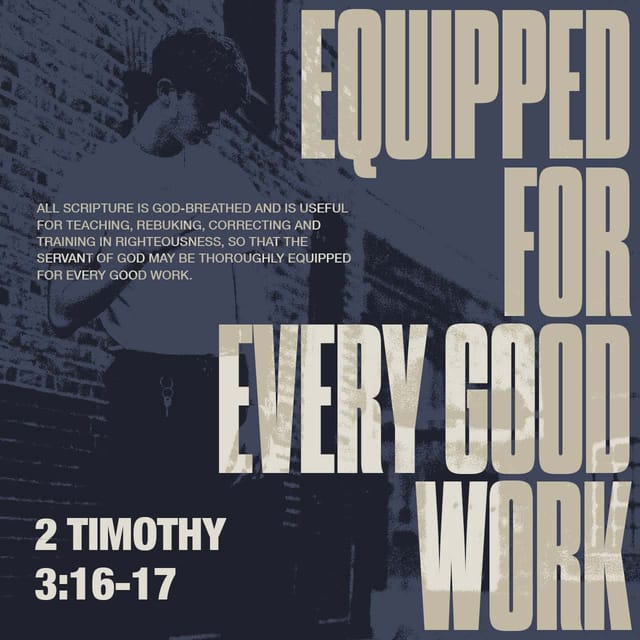
Every Scripture is God-breathed and profitable for teaching, for reproof, for correction, and for instruction in righteousness, that the man of God may be complete, thoroughly equipped for every good work.
2 Timothy 3:16-17
Historical lead-up
Second Timothy is presented as Paul’s message to Timothy, a younger ministry partner. Paul writes in a time of hardship and urges Timothy to remain faithful. The surrounding passage reminds him of the teaching and example he has received and warns that difficult times and misleading teachers will challenge the church.
Why this verse was written
Paul is encouraging Timothy to hold firmly to the Scriptures he has learned and to rely on them in his ministry. These words explain why Scripture matters: it comes from God and equips God’s people to serve faithfully.
True meaning
In this passage, “Scripture” refers to the sacred writings Timothy had been taught. Paul says Scripture is useful for teaching what is true, exposing what is wrong, correcting a mistaken course, and training people to live rightly. Its purpose is not merely to provide information, but to prepare God’s servant for good work. The passage presents Scripture as a trustworthy guide that shapes both belief and conduct.
Living it today
Read the Bible with a willingness to be taught, corrected, and encouraged—not only to find support for what you already think. Choose one practical response to what you read, such as making amends, serving someone, or changing a habit. In relationships, let Scripture guide you toward honesty, patience, and care. Pray for wisdom to understand and live out what you are learning, and discuss difficult questions with trusted fellow believers or a church leader.
What follows
Paul continues by urging Timothy to keep proclaiming the message faithfully, with patience and care, even when people are reluctant to hear sound teaching.
Related: John 1:14 — King James Version (KJV) (2026-08-22)
Related: John 1:14 — Young’s Literal Translation (YLT) (2026-08-22)
Go deeper with a Verse Study Card — plain words, context, key words, cross-references, and a reflection.
Study this verse
Plain words, context, key words, cross-references, and one reflection question for a single verse.