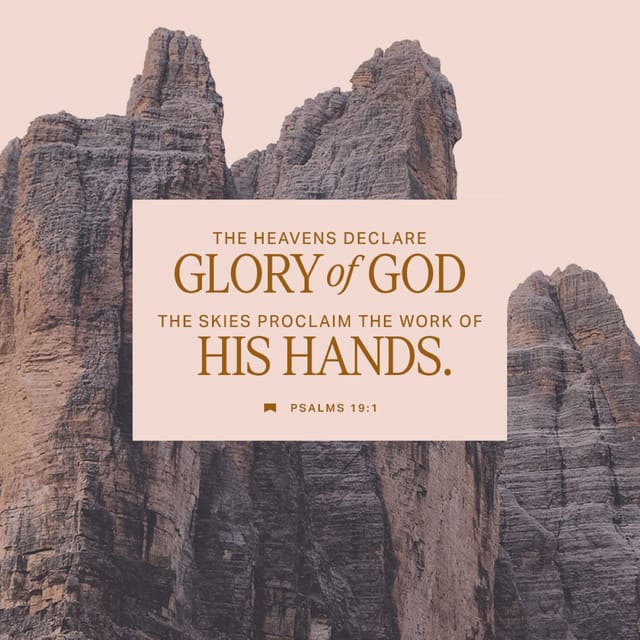
To the chief Musician, A Psalm of David. The heavens declare the glory of God; and the firmament sheweth his handywork.
Psalms 19:1
Historical lead-up
This psalm is attributed to David and addressed to the chief musician. It begins by looking at the created world—especially the sky—as a witness to God’s greatness. Rather than describing a particular event, the opening invites readers to notice what creation continually displays.
Why this verse was written
David wrote this song of praise to direct attention from the heavens to their Creator. The verse helps worshipers reflect on God’s glory and the work of his hands through the world around them.
True meaning
“The heavens” refers to the sky and the vastness above us. To “declare” means that creation makes God’s glory known, not through spoken words, but through what it is and does. “The firmament” is the expanse of the sky, and “his handywork” points to God as its maker. The verse is not saying that the sky is God; it is saying that the sky bears witness to God’s power and artistry.
Living it today
Take a moment to notice the sky, the changing light, or the order and beauty of the natural world. Let that attention become gratitude and prayer. In daily life, this verse can also encourage humility: the world is not ours to control or claim as our own, but something to receive with care and thankfulness. You might discuss with your group what parts of creation most readily turn your thoughts toward God.
What follows
The next verses continue the picture: day and night keep showing knowledge, and the heavens’ witness reaches across the earth and to the world’s end. The thought is that creation’s testimony is ongoing and widely visible. Today, this can remind us to look for reasons to praise God in ordinary routines, while remembering that people may respond to what they see in different ways.
Related: John 1:14 — King James Version (KJV) (2026-08-22)
Related: John 1:14 — Young’s Literal Translation (YLT) (2026-08-22)
Go deeper with a Verse Study Card — plain words, context, key words, cross-references, and a reflection.
Study this verse
Plain words, context, key words, cross-references, and one reflection question for a single verse.