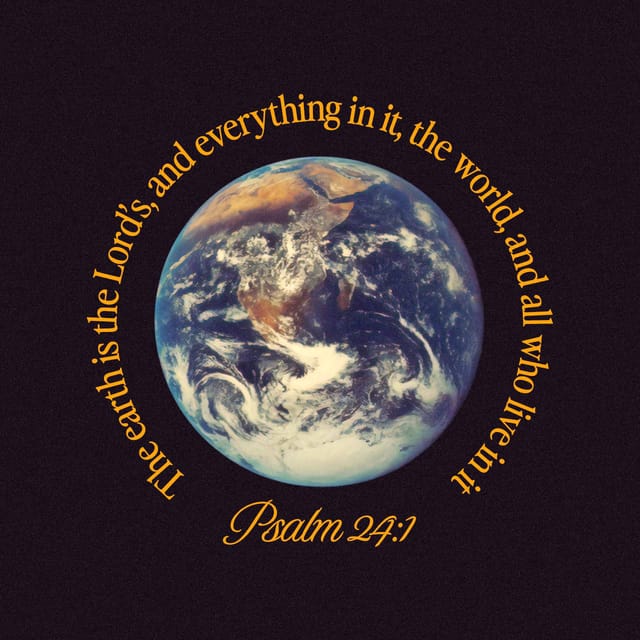
A Psalm of David. The earth [is] the LORD'S, and the fulness thereof; the world, and they that dwell therein.
Psalms 24:1
Historical lead-up
Psalm 24 is identified as a psalm of David. Its opening looks at the whole created world and declares that it belongs to the LORD. The next verse points to God as the one who founded and established it, setting up a reflection on who may come into God’s holy presence.
Why this verse was written
David’s psalm directs worshipers to recognize God’s authority over creation and everyone who lives in it. It begins with God’s ownership and greatness before turning to the question of how people should approach him.
True meaning
“The earth” and “the world” refer to creation, while “the fulness thereof” includes all that fills it. The verse says that the LORD is the rightful owner of the world and its inhabitants. It is not merely a claim about land or possessions: every person and every part of life belongs under God’s care and authority.
Living it today
This verse can help us hold our possessions, time, abilities, and responsibilities with gratitude rather than treating them as ours alone. We can ask how to use what we have in ways that honor God and serve others. It also invites humility: our neighbors, like us, belong to God. In prayer, we can thank God for creation and ask for wisdom to care for what has been entrusted to us.
What follows
Verse 2 adds that God founded and established the world. Verses 3–4 then ask who may come into God’s holy place and describe such a person as having clean hands and a pure heart, not pursuing what is empty or speaking deceitfully. Together, these verses connect God’s authority over creation with a call to approach him with integrity in our actions, inner life, desires, and words. Consider discussing with your group what one practical step toward greater honesty or purity of heart might look like this week.
Related: John 1:14 — King James Version (KJV) (2026-08-22)
Related: John 1:14 — Young’s Literal Translation (YLT) (2026-08-22)
Go deeper with a Verse Study Card — plain words, context, key words, cross-references, and a reflection.
Study this verse
Plain words, context, key words, cross-references, and one reflection question for a single verse.