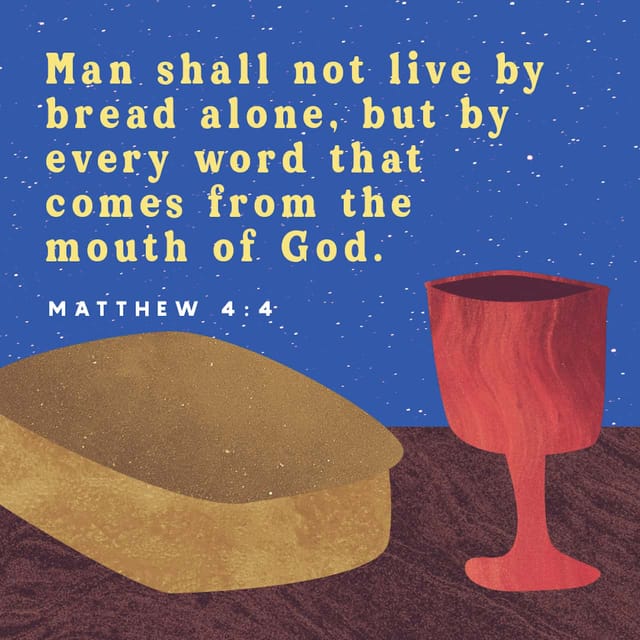
And in response he said, “It has been written: ‘Not by bread alone shall man live, but by every word that proceeds from the mouth of God.’”
Matthew 4:4
Historical lead-up
Matthew places this verse during Jesus’ time in the wilderness, after he has fasted for forty days and nights. The devil challenges him to turn stones into bread. Jesus answers by drawing on Scripture rather than using his power to satisfy the challenge.
Why this verse was written
Matthew tells of Jesus’ testing in the wilderness as part of the story of his ministry. This moment shows Jesus remaining faithful to God under pressure. His reply points readers to the truth that life depends on God, not merely on food or other immediate needs.
True meaning
Jesus is speaking to the devil, but his answer also teaches those who hear the story. “Bread alone” represents the things that sustain physical life; “every word that proceeds from the mouth of God” points to God’s instruction and provision. Jesus is not saying that food does not matter. He is showing that physical need does not give us permission to distrust or disobey God. God’s word is essential to a faithful life.
Living it today
When you feel pressured, hungry, anxious, or impatient, pause before acting and ask what faithfulness to God looks like in that moment. Make room for Scripture, prayer, and wise counsel alongside the practical steps you need to take. In relationships, this verse can encourage us not to let immediate wants or fears rule our choices, but to seek God’s guidance and treat others with care. You might pray, “God, help me trust your wisdom and follow what is good today.”
What follows
The next verses continue the testing. The devil takes Jesus to the temple and urges him to throw himself down, appealing to words about God’s care. Jesus answers that Scripture also says not to test God. The continuing thought is that trusting God does not mean demanding a dramatic sign or acting recklessly. We can rely on God while choosing humble, obedient steps.
Related: John 1:14 — Catholic Public Domain Version (CPDV) (2026-08-22)
Related: John 1:14 — Young’s Literal Translation (YLT) (2026-08-22)
Go deeper with a Verse Study Card — plain words, context, key words, cross-references, and a reflection.
Study this verse
Plain words, context, key words, cross-references, and one reflection question for a single verse.