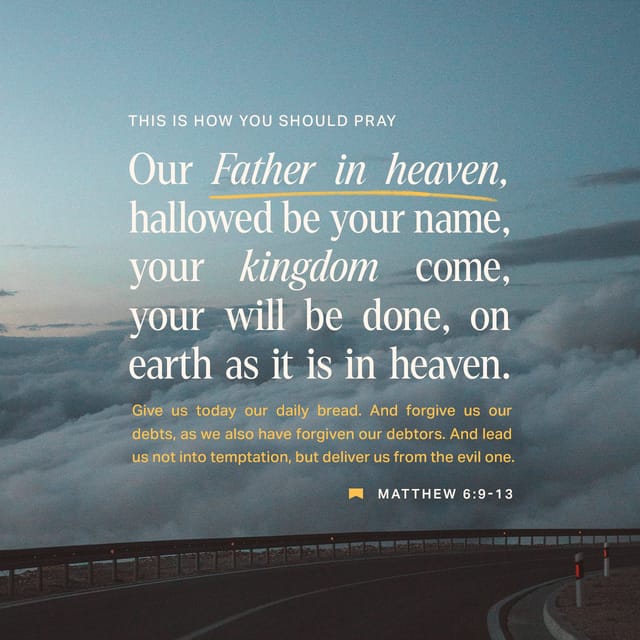
Give us this day our life-sustaining bread.
Matthew 6:11
Historical lead-up
In Matthew 6, Jesus is teaching his disciples how to live faithfully before God. He warns against making prayer a performance for other people and teaches them to pray with sincerity and trust. This verse comes within the prayer Jesus gives as a pattern for his followers.
Why this verse was written
Matthew presents Jesus’ teaching to help his disciples understand prayer and life with God. This request turns their attention to daily dependence: they are to ask God for what sustains life, rather than treating provision as something they can secure entirely on their own.
True meaning
Jesus teaches his disciples to ask, “Give us this day our life-sustaining bread.” “Us” makes the request shared, not merely individual; “this day” keeps it close to present needs; and “life-sustaining bread” points to the food and provision needed to live. The verse invites humble trust in God for daily necessities. It does not promise that every desire will be met or that hardship will never come.
Living it today
Bring your ordinary needs to God in prayer, including food, work, strength, and help for the day ahead. The word “us” can also prompt you to notice others’ needs: share what you can, offer practical help, and pray for people facing scarcity. When provision feels uncertain, seek support from trusted people in your community as well as praying. In a small group, you might ask, “What do we need today, and how can we help one another?”
What follows
The next requests in the prayer connect dependence on God with relationships and moral choices: Jesus teaches his disciples to ask for forgiveness while forgiving others, and to ask for help in temptation and deliverance from evil. The following verse emphasizes the importance of forgiving others. Together, these words encourage a daily life of receiving God’s care, seeking mercy, extending forgiveness, and asking for help to do what is right.
Related: John 1:14 — Catholic Public Domain Version (CPDV) (2026-08-22)
Related: John 1:14 — Young’s Literal Translation (YLT) (2026-08-22)
Go deeper with a Verse Study Card — plain words, context, key words, cross-references, and a reflection.
Study this verse
Plain words, context, key words, cross-references, and one reflection question for a single verse.